Market research, design, hosting, AI-assisted development, payments, GDPR, MarTech, campaigns and analytics.

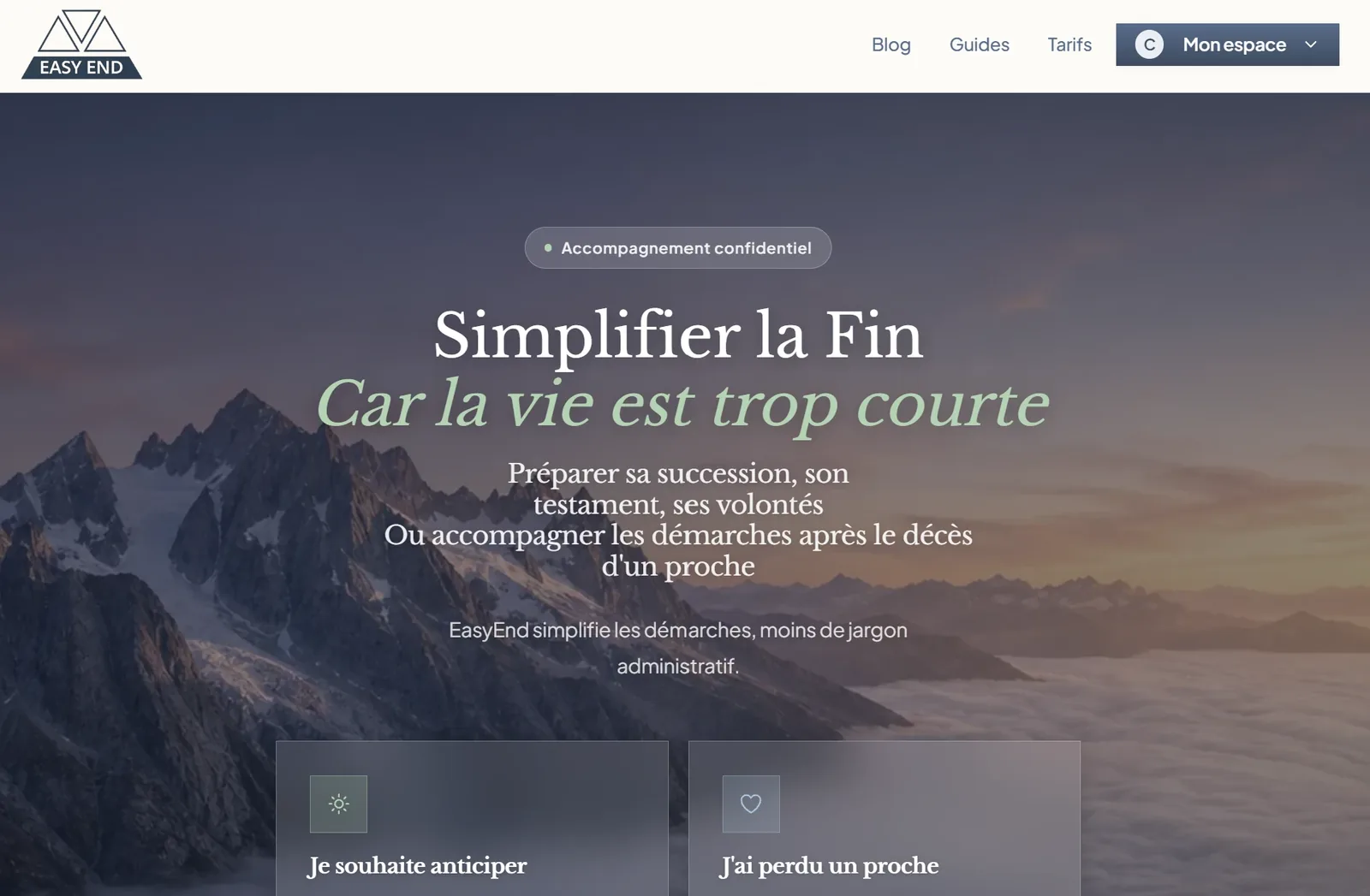
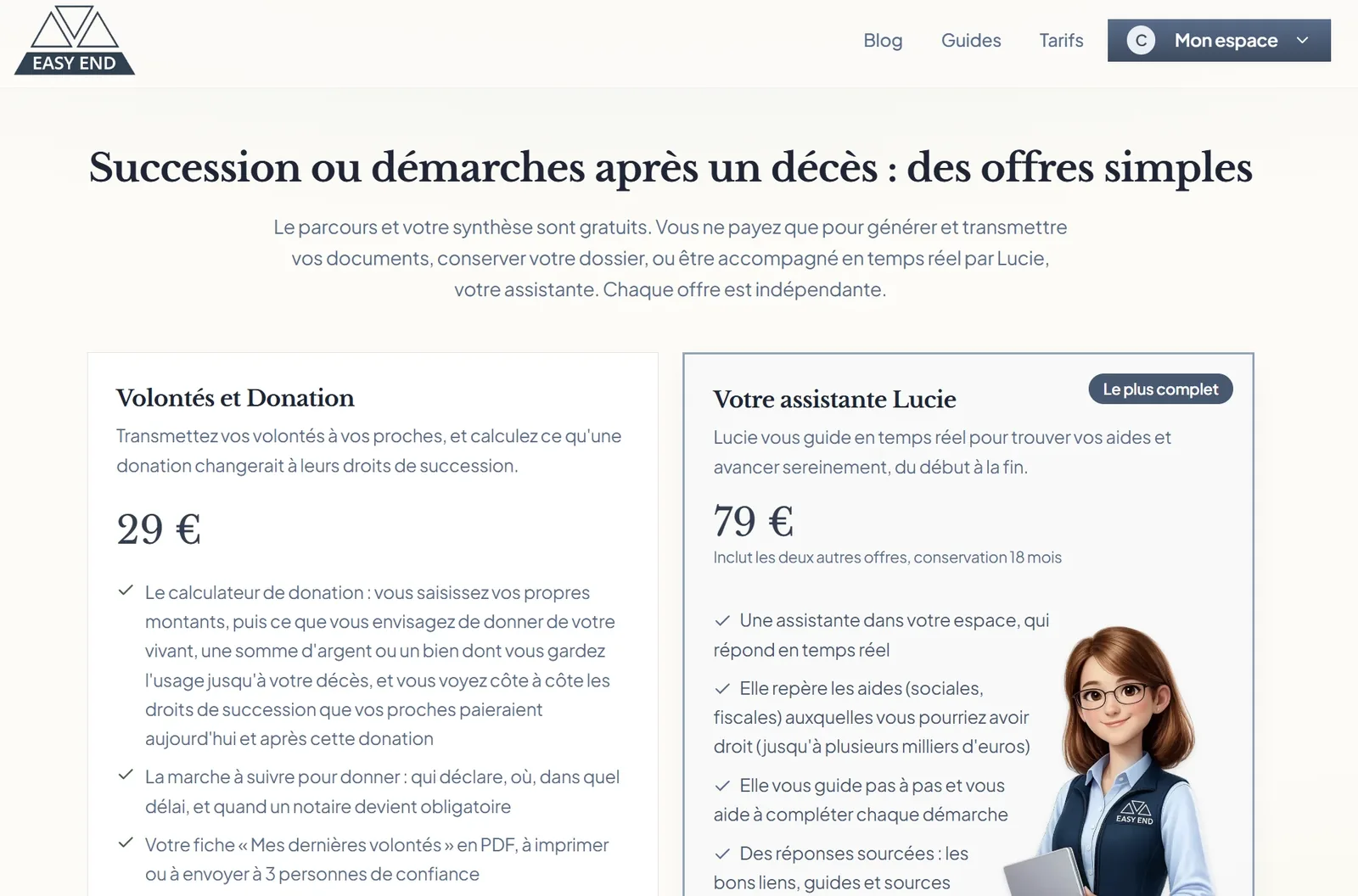
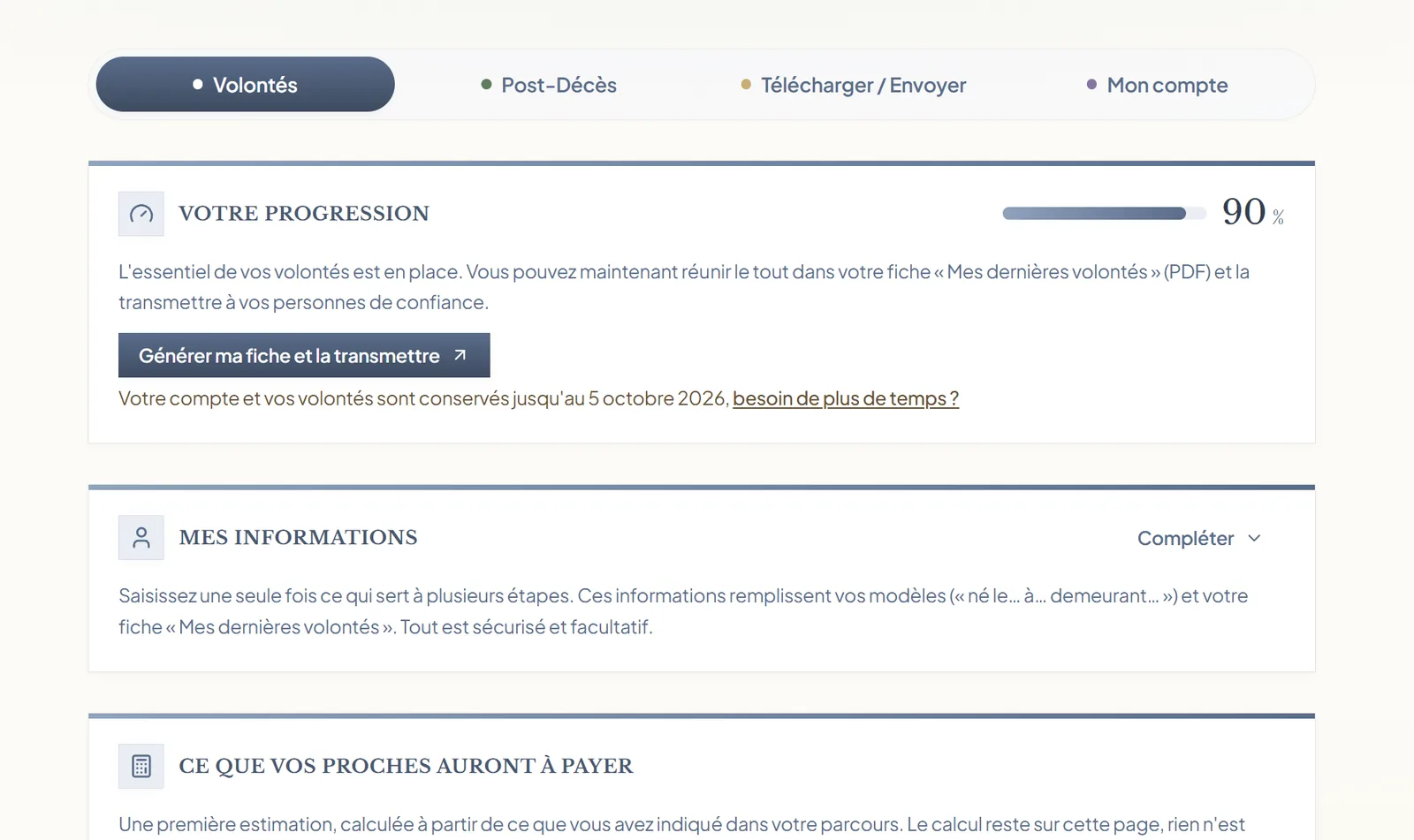
Before a death, people need to plan ahead: wishes, end of life, estate. After it, families face wills and dozens of formalities with no clear guide. EasyEnd supports both moments, step by step: guided journey, generated documents, checklist, pre-filled letters, freemium model. An ongoing venture that I founded and run myself, with no team and no agency budget.
Search volumes, competition, sector rules. I found three factual errors in my own acquisition plan, including a compliance one: ad retargeting is banned on bereavement topics by the major ad networks. The strategy was revised before a single euro was spent.
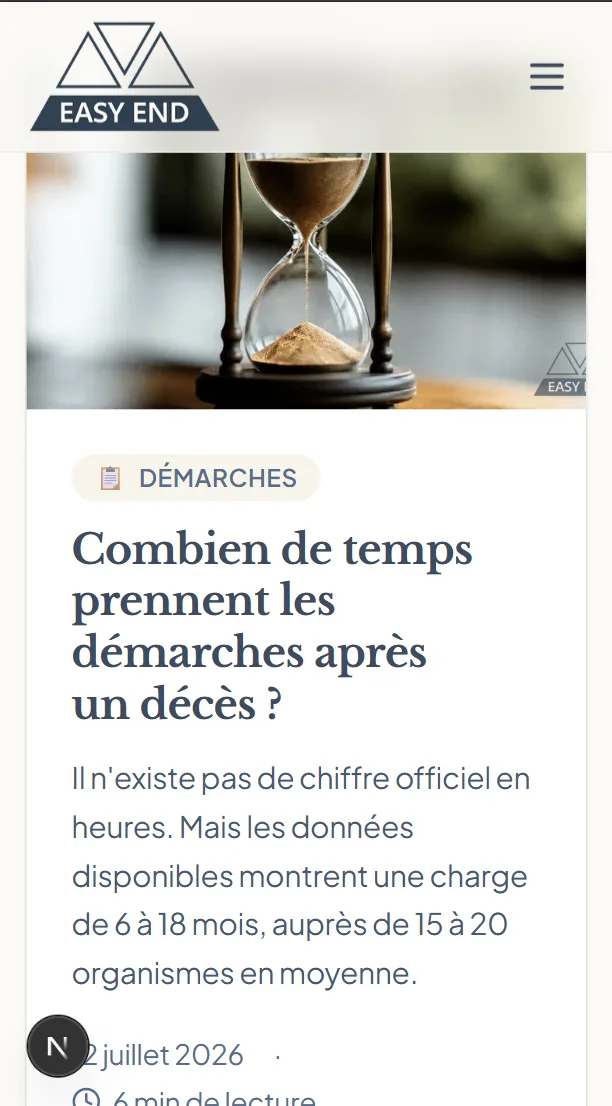
Journey, tone, identity, mascot. The topic is sensitive: restraint beats effect. Pages are written to be understood by a grieving person, not to impress.
Next.js 15, TypeScript, PostgreSQL through Prisma. AI writes much of the code; I decide the architecture, review and correct. Fixes go into the shared component, never screen by screen.
Stripe for paid plans: entitlements, webhooks, idempotency, test/live switch. Transactional email (Resend) and marketing email (Brevo) on shared HTML blocks, with SPF, DKIM and DMARC. Follow-ups automatically exclude paying customers.
An assistant grounded in the site content: RAG, tool calling, cost guardrails. After optimization it uses 2 to 3 times fewer tokens per exchange, with the same answer quality.
In-house consent banner instead of a subscription, a consent-proof table for anonymous visitors, automated purging based on retention rules, encrypted admin export.
Hosted in France on a self-managed VPS: Coolify, Docker, Traefik, automatic certificates, zero-downtime deploys for about €9 a month. GA4 and Tag Manager in advanced consent mode, campaigns with landing-page A/B testing.

A live freemium platform and an ongoing venture: I'm the founder and I run everything myself (product, infrastructure, compliance, acquisition and support). No business figures published here: this case shows execution, not a sales pitch. Want to know more? Get in touch.
