An eight-month web performance deadlock, solved in weeks once the framework was set and a single owner appointed.
Large international B2B group. Several web projects running in parallel, blurred roles, requests scattered across email and chat. A public-site performance incident had been dragging on for eight months between the security team, infrastructure and the external agency developing the CMS. Everyone was right within their own scope; nobody owned the whole.
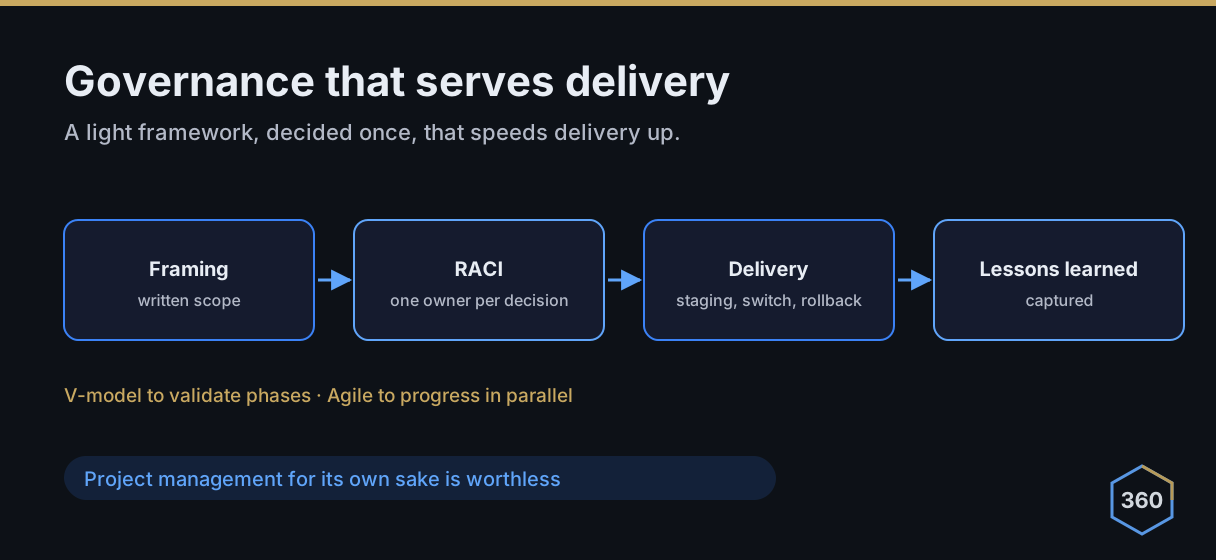
I formally raised the absence of a RACI and of a method, and asked for a dedicated framework instead of letting projects run blind.
A RACI per activity: editorial, IT, cloud, security. One owner per decision, not one committee per decision.
No more email tracking: every site request goes through a single ticketing tool, with categories and permissions. Service becomes traceable.
On the stuck incident I became the single coordination point: a written situation report shared before the decision workshop, and an explicit freeze on uncoordinated changes during the sensitive period.
Layer by layer: CDN, WAF, identity, CMS, database.
Staging validation first, a costed rollback plan, an announced change window, then the CDN/WAF rule fixes.
A written post-incident review: timeline, causes, decisions, lessons. The next incident of this kind takes days, not months.
I am not dogmatic: I borrow from several methodologies and keep what serves delivery. From the V-model, I keep phase validation: nothing moves on until the previous phase is accepted. From Agile, I keep short iterations, regular demos and scope adjustment. The result is often hybrid, on purpose.
AI has tipped the balance toward Agile: I can progress on several parts of a project at once (code, content, measurement, documentation), where they used to be handled one after the other. I still keep V-model milestones to validate a phase and ship something stable.
An eight-month deadlock, solved in weeks once the framework was in place. Traceable request handling. A method reusable on the next projects. Governance is only worth it if it serves delivery: project management for its own sake is worthless. Want to know more? Get in touch.
